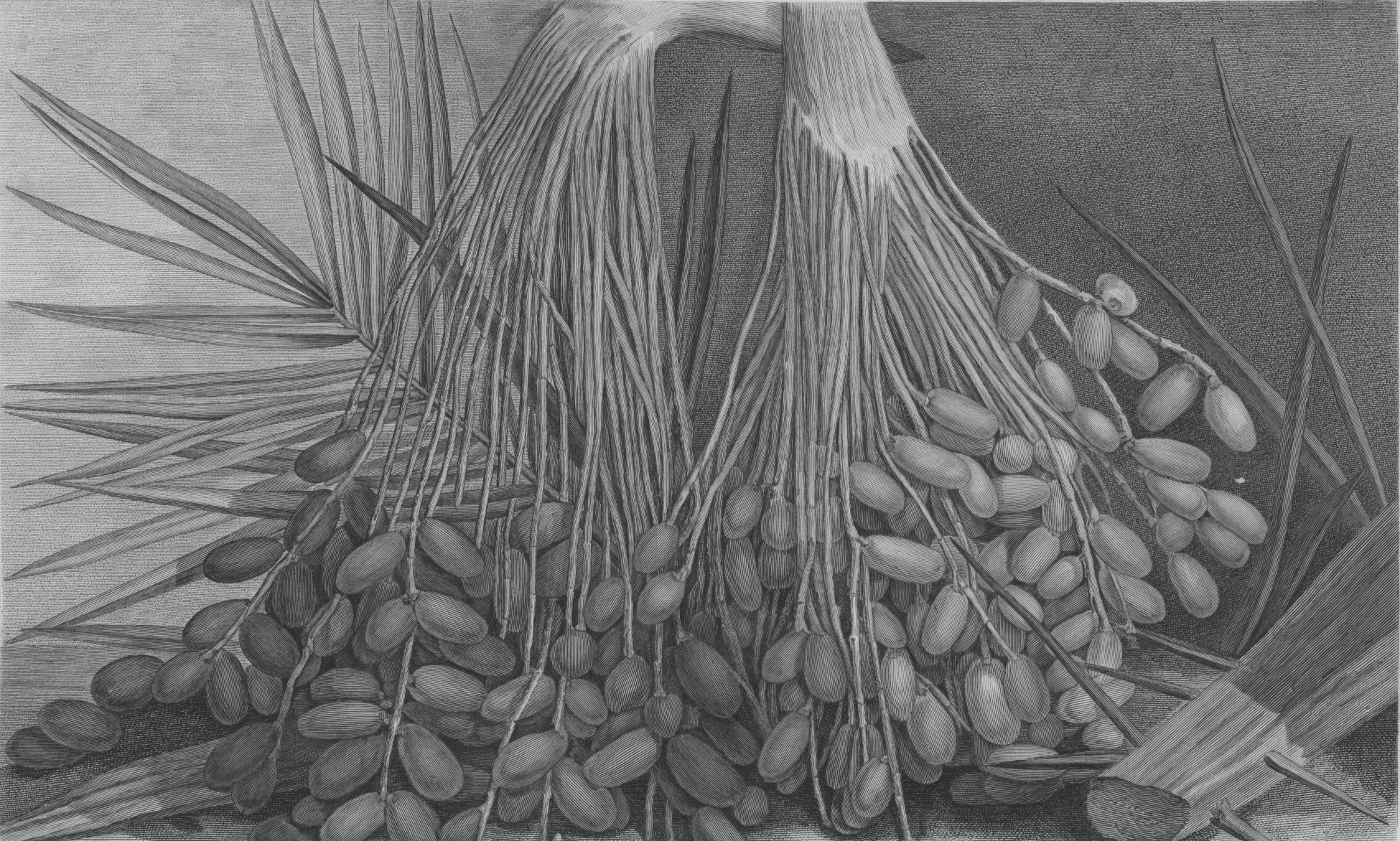
The date palm (Phoenix dactylifera L.) is the tree producing the date, a delicious and nutritious fruit. Date palms represent self-reliance and abundance: parts of the tree have a medicinal use.
In this Article
Phoenix dactylifera L.
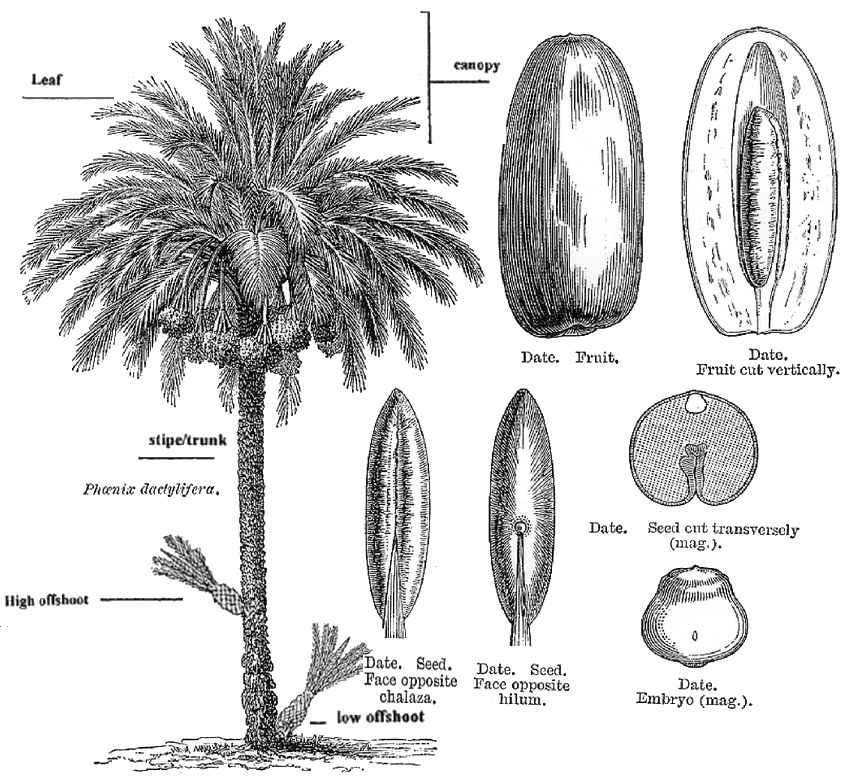
The date palm, Phoenix dactylifera, is an evergreen tree that belongs to the large and diverse palm family. It grows up to 23 meters tall, lives in hot, arid conditions, and can survive for up to 100 years.
It is said that the date palm grows with its feet in water and head on fire.
It requires access to a water source below ground, such as an underground river, and hot temperatures of more than 50°C above ground to bear fruits.
Family: Palmaceae
Genus: Phoenix
Species: Dactylifera Linné
Synonym: Palma major
Arabic: Tamr تمر, Balah بلح
English: date fruit, date palm
It is also referred to as nakhl in Arabic, while the fruit of the date palm is called tamr in many Arab and African countries.
Date fruit and palm names in different languages
Vernacular names for the date palm include mō/og, Ḵūr (cf. Mid. Pers. muγ); mok, Kermān; moḡ, Fīn; moḵ/h, Tangestān; moḵ, tarak, Jahrom; mˊug/ḡ (?) Bandar-e ʿAbbās, Jīroft, and so on; Baluchi mòk, Dezak; mač, Zābol; māč, Čāhbahār; and faṣīl, Lārestān (cf. faṣīl “small young palm” and naḵīl “tall old palm” in Tangestān). A young palm grown haphazardly from a date pit is called pešk (originally “date pit”) and ḵorost (< ḵod-rost, lit., “grown by itself”) in Fīn and m/harvās in Tangestān. A date-palm grove or orchard is generally called naḵlestān, bāḡ (garden), šahr, mog/ḡestān, or naḵīlāt (an Arabic word found in some modern sources).
Iraq: تالة، لينة، فسيلة، (شجرة النخيل) Tala, Leena, Faseela (date Palm)
Palestine: شجرة البلح (شجرة النخيل) Shajret al-balah (date Palm)
Tunisia: تازدايت Tazdayt
Oman: صرمة، الفسيلة، الأوانه Sarmah, Al-Faseela, Al-Awana
Qatar: الشجرة المباركة، أنخله Al Shajarah Al Mubaraka (blessed tree), Ankhalah
Hindi: Khaji, Khajur, Salma, Sendhi
Turkish: Hurmah
Hebrew: Tamar (תמר)
Indonesian: Buah kurma
Etymology of Phoenix Dactylifera

The scientific name, Phoenix dactylifera, comes from ancient Greece. The coastal region between the Jordan Valley and the Mediterranean Sea is known as Phoenicia, Greek for purple land, a nod to the purple dye that made the area famous.
Some historians speculate Theophrastus associated the purple color of the murex shellfish, made famous by the Phoenicians, and gave the word Phoenix to date palm fruits, which appear purple on ripening.
Because the date palm grew abundantly in Phoenicia, and they were among the first exporters of the fruit, it became known as Phoenix, or tree of Phoenicia and was featured on Phoenician coins.
Dactylifera translates to “finger bearing,” a reference to the oblong shaped dates and the clusters they grow in (Linné, 1734). A single large bunch may contain more than a thousand dates, and can weigh between 6 to 8 kg.
Mythology connects the date palm to the immortal Phoenix. Some legends say that the palm would die and come back to life along with the famous bird. The bird and the date palm, can both re-grow after fire damage.
Pliny the Elder in the 1st century CE. writes after Ovid:

The phoenix, of which there is only one in the world, is the size of an eagle. It is gold around the neck, its body is purple, and its tail is blue with some rose-colored feathers. It has a feathered crest on its head. No one has ever seen the Phoenix feeding.
In Arabia it is sacred to the sun god. It lives 540 years; when it is old, it builds a nest from wild cinnamon and frankincense, fills the nest with scents, and lies down on it until it dies…
~ Natural History, Book 10, 2
Ovid describes the phoenix bird, who would build its nest at the top of a tall date palm.

In ancient Egypt the Bennu bird (a heron- or stork- like bird) and the date palm were given the same name and in many cases were considered synonymous.
The terms ‘Bennu,’ ‘bnr,’ ‘bnr.t’ were also applied to the date palm fruit and to everything sweet. The date palm was linked in ancient Egypt to the sun-bird, and they gave both the same name indicating the importance of this tree of life. Bennu hieroglyphs: ‘bnw‘  or
or  .
.
The date palm was a symbol of time and life, in hieroglyphics, the palm frond 𓆳 was used as the symbol for year. The date palm rib was mainly a gift of goddess Seshat and later god Thot as (lord of time) to the kings for a guarantee for a long life and millions of years for the king.
One of the epithets of the goddess Hathor was Mistress of the Date Palm, associated with bounty and fertility.
Hieroglyphs for date fruits:

Geographical distribution of date palms
The date palm most probably originated in the region of present-day Iraq and parts of Syria and Iran – known as Mesopotamia.
This region lies within the Fertile Crescent, which also includes parts of Egypt (especially the Nile Valley) and the Levant (modern-day Syria, Lebanon, Israel, Palestine, Iraq, and Jordan). Date fruits and palms were popular also in ancient Greece and Rome.

Dates were also a staple of the Indus Valley Civilization, which stretched through Afghanistan, Pakistan, and northwestern India. They followed trade routes to Spain and reached Mexico and California by the mid-1700s.
Date-producing Arab countries are Bahrain, Egypt, Iraq, Jordan, Kuwait, Mauritania, Morocco, Oman, the Palestinian territories, Saudi Arabia, Sudan, Tunisia, the United Arab Emirates, Yemen, Algeria, Libya, and Syria.
Between them, Algeria, Egypt, Libya, Morocco, and Saudi Arabia produce 600 different kinds of dates, which accounts for 60% of the world’s production.
In Saudi Arabia, Madinah’s date market (Souq Al Tumoor) contains about 150 varieties.
Approximately 100 million date trees are cultivated worldwide, with the majority of them in the Middle East. In addition, dates are found in countries such as Australia, the United States, and Mexico, as well as throughout South America and regions of Africa.

The Genus Phoenix: Distribution, Use, and Conservation
| Species | local/common name | Distribution | Use /Conservation |
|---|---|---|---|
| P. acaulis Roxb. | Stemless date palm | Bhutan, Nepal, Northern India, Myanmar (Burma) | Stemless; fruit edible; sometimes confused with P. loureiri; conservation status uncertain; local populations possibly threatened by development |
| P. andamanensis | Andaman Island date palm | Bay of Bengal Myanmar | Single trunk; semidwarf; species status somewhat questionable; rare, may be considered threatened |
| P. atlantica A. Chev. | – | Cape Verde Islands | Clustering; conservation status unknown |
| P. caespitosa Chiov. | Date palm | Somalia, Arabian Peninsula, Yemen | Stemless; fruit edible; habitat: wadis; species status somewhat questionable; restricted area, may be considered threatened |
| P. canariensis H. Wildpret | Canary (Island) date palm | Australia, Bermuda, Canary Islands, Italy, Spain. | Single trunk; fruit edible; widely cultivated as ornamental; wide range of habitats within distribution; genetic erosion from hybridization threatens genetic integrity |
| P. dactylifera L. | Date palm | Arabian Peninsula, Australia, California, China, El Salvador, Fiji, Iran, India, Mauritius, northern and western Africa, Pakistan, Spain. | Habitat: wadis, oases; widely cultivated in suitable climates for fruit; many other plant parts utilized |
| P. loureirin Kunth | Mountain date palm | India, China, Himalayas, Indochina, Philippines | Dwarf; fruit edible; other plant parts utilized; taxonomy somewhat confused: two varieties (loureiri, humilis); development threatens local populations but overall, not threatened |
| P. paludosa Roxb. | Mountain date palm | Andaman, Bay of Bengal, Indochina, Malaysia, Sumatra | Semidwarf; habitat: mangrove swamps and estuaries; not considered threatened as a species but specific populations, might be threatened |
| P. pusilla Gaertn. | Ceylon date palm | Southern India, Sri Lanka | Fruit edible; other plant parts utilized; conservation status unclear |
| P. reclinata Jacq. | Senegal date palm | Tropical and subtropical Africa, Arabian Peninsula, Madagascar, Comoros Islands | Habitat and morphology variable; fruit edible; other plant parts utilized; widely cultivated as ornamental; not considered threatened |
| P. roebelenii O’Brien | Pygmy date palm | Laos, Vietnam, southern China (Yunnan) | Rheophytic; dwarf; widely cultivated as ornamental; conservation status unclear, use as ornamental may result in removal of native populations |
| P. rupicola T. Anderson | Cliff date palm | Andaman Islands, Bhutan, Northern India | Single trunk; semidwarf; fruits eaten by animals but not humans; conservation status unclear |
| P. sylvestris (L.) Roxb. | Indian date palm | India, Pakistan, Myanmar, southern China. | Wide range of habitats; utilized for sugar, fruit; not threatened |
| P. theophrasti Greuter | Cretan date palm | Greek Islands (Crete), Turkey | Habitat: coastal areas; species status questionable; restricted growing area, threatened by population pressure |
The wild Indian date palm (P. Sylvestris), which is tapped for the sugar derived from its sap, looks very much like the date palm, but its fruit is not edible. It is believed to be the ancestor of the true date palm.
Tapping of palms as a source of sweet sap is ancient and widespread throughout the palmgrowing regions of Africa, Asia and the Americas.

The methods of tapping ary from place to place. However, traditionally, tapping of the date palm has not developed in all date producing countries, apart from enforced bans on tapping that have been imposed, be it on religious grounds or to protect a the food source.
Palm tapping bears the potential danger of abuse and addiction to the fermented sap, and a consequent decline of a recurrent food supply. Tapping a palm is a severe intervention. The palm’s survival depends on the skill of the tapper because if the daily scarring is carried on too far, the palm will die.
Pliny the Elder (AD 23–79), in his Naturalis Historia, related an account by King Juba II of Mauretania (ca.25 BC–AD ca. 23), who noted that “the islands contained ‘palm-groves full of dates … in addition to this there is a large supply of honey”. (bee honey or date syrup?)
Sweet sap is consumed fresh, processed into syrup or sugar, or fermented into alcohol or vinegar and is medically used.
ETHNOBOTANY/ETHNOMEDICINE: Date Palm as Materia Medica
Humans have relied on nature as the main source of treatments since the dawn of history. The study of how people of a particular culture and region interact with and use indigenous plants and how they classify, identify, and relate to them is called Ethnobotany.
Ethnomedicinal information gathered from indigenous knowledge relating to traditional date fruit uses revealed that the sweet delight enjoys a wide array of traditional uses in human medicine due to it’s therapeutic properties.
Almost every part of the date palm is used for medicinal or nutritional purposes.
Medical use of date palm parts comes from ancient Mesopotamia, Anatolia, the Levant, Egypt, the Greek coast, and even distant Rome.

This is no surprise, since these areas were in constant trade and cultural exchange with Mesopotamia and surrounding regions. In fact, the data suggest that common medicinal practices and medications were spread across the Fertile Crescent and also manifested themselves in later Greco-Roman and Aramaic medical writings.
Drugs were traveling as a commodity, and doctors were dispatched by kings for the service of other rulers.
Dates – A Timeless Staple
Medicinal use of the palm and its dates is well documented in Assyrian cuneiform tablets. From Assyrian herbal texts, we learn that it was used to cure coughs, earaches, head-aches and stomach-aches. It was made into poultices to cure blisters and bruises, fought demons and carry spells.
Magical spells and rituals were part of the healing process to end the double nature of disease – illness or demon – behind the physical manifestation of the ailment.

The Neo-Assyrian fragment of the clay tablet is addressing conditions affecting the cranium, as part of the Nineveh Medical Encyclopaedia with 5000 medical prescriptions.
…you take leaves from gišimmaru-tree (‘date palm’), which sway when there is no wind, from the north side (of the tree), you twist it seven times to the right, seven times to the left, you tie seven and seven knots on them, you recite the incantation, (and) you tie them on his temple.
Incantation: “He seized the temple. He seized the straight (part of the) head. He seized the bold(?) (part of the) head. He seized it, he seized it, Adapa, the wise man of Eridu, seized the temple. He seized the bold(?) (part of the) head.”[sic]
Cuneiform literature provides evidence that ancient practitioners were competent in curing ailments, often using multiple prescriptions for the same problem.
In Sumerian, Assyrian, Babylonian, and ancient Egyptian mythology, the date palm was symbolically described as a tree of life, and date beer/wine was widely consumed. Palm dates were used as a diuretic, in mucilaginous poultices for local soothing, for lung treatment, and in a laxative remedy.
Ancient Egyptian medicinal remedies

Swelling of any limb of a man: Fresh dates, date kernels, dry myrrh, wax were combined to a paste and bandage for four days.
Swollen and aching legs: Red natron was mixed with fermented date juice and the legs were bandaged therewith.
Cough in a child: Dried crushed date are ground in a ‘hin’ of milk and drunk by the child.
Kill worms: Date kernels, carob pod pulp, sweet beer were mixed, boiled, strained and drunk; the remedy had instant effect.
Cure heat of the heart: Fresh dates, honey, sweet beer were mixed and administer to the anus for four days.
Sneezing: Date juice fill the opening of the nose with it.
Hair growth: Bone of a dog, date kernels, donkey’s hoof, boiled well in a jar with oil or fat and used as an unguent.
Historical texts from ancient Egypt and Mesopotamia reference dates as a strengthening tonic, believed to promote vitality and recovery.
The fermented date beverage, date beer, is referred to in the cuneiform inscriptions as “The Drink of Life.” The ancient Egyptians used the fruits to make date wine.
A not-well-kept secret in Islamic folk medicine is the aphrodisiac potency of the date, date palm heart (terminal crown), and date inflorescence. Grooms are advised to eat one pound (half a kilo) of dates on the day of their wedding to ensure the wedding night goes smoothly. Dates are sometimes combined with other foods, like milk and cinnamon, to enhance their aphrodisiac properties.
A breakfast meal composed of black bread and cooked yolk (seven eggs) with 100 grams Agua (or tamr ż) and 15 grams ghee or butter is aphrodisiac food. This breakfast must be followed with a cup of milk or carrot juice.
Modern medicine seems to support many of the claims heaped on dates and give a nod of approval to the custom of Muslims breaking their long fast during the month of Ramadan with three to seven dates, following the tradition of the Prophetﷺ.
The components of the date point to the possibility that it can prevent cancer. Living proof is the low rate of cancer among populations where dates are regularly consumed. It is also said to slow ageing.
The longevity of many Bedouins of the desert might have something to do with their date-focused diet.
Traditional Uses of Date Palm (Phoenix dactylifera) in Folk Medicine
Fruits, kernels, and pollen of dates have a long history of being used for various therapeutic purposes across different cultures, particularly within Islamic traditions (Prophetic Medicine) and in traditional and folk systems of medicine where date palms are found to be cultivated.
The beneficial health and nutrition values of this “blessed tree” have been underlined for centuries because of the antioxidant properties of the fruit and pollen.
Remedies employing date products appear in the Syriac Book of Medicine, in the texts of practitioners from Africa and Southwest Asia; and in Iranian, Indian, Chinese, Greek, and Roman medical writings.
The most widely used component is the fruit, which is high in fiber, sugars, polyphenols, and vital minerals.
In traditional Arabic and Unani medicine, dates were commonly prescribed to support digestive health, alleviate coughs, and boost energy. They were often mashed into syrups or pastes, sometimes mixed with milk, honey, or herbs for enhanced healing effects.
Traditional medicine also employs the various components of the date palm to treat a variety of conditions:
Dates have been recommended for cardiovascular health, fertility, reduction of inflammation, digestive health, and brain health in modern medicine, and for treating weakness, memory instability, fever, pain, nervous disorders, male and female infertility, pertussis, and bladder pain as a sedative, expectorant, laxative, and diuretic (due to the antioxidant properties – flavonoid and polyphenolic).
Seeds (pits), are used in traditional medicine and researched for their anti-inflammatory, anti diabetic, and antioxidant qualities. They are used to treat headaches, eye conditions, and as a complement to coffee.
Leaves, are rich in tannins; leaves have long been used in decoctions to reduce inflammation and promote wound healing.
Sap facilitates digestion and has diuretic properties. In North Africa, date palm juice, is referred to as “lagmi” and is used either fresh or fermented for tonic and digestive purposes,
Bark is used to treat gastrointestinal issues and antimicrobials in traditional medicine.
Roots are occasionally taken for their antimicrobial and diuretic properties in traditional systems and to cure fever and skin ulcers. The roots are also used to ease toothaches.
A paste made from the tree’s seeds can be beneficial in treating ague, a form of fever with chills.
While the gum collected from the stem is well recognized to be a good treatment for diarrhea and urinary symptoms.
Pollen promotes fertility.
Date products used in traditional medicine in southern Algeria
| Parts Used | Diseases / Therapeutic Effects |
|---|---|
| Dates | Diarrhea; injuries; constipation; hypertension; edema; dizziness; gastric ulcers; easy delivery; hemorrhage; cancer; broken bones (arms, legs, back); elderly support; brown skin spots; beauty mask; scorpion bites |
| Pollen | Male and female sterility |
| Leaves | Cough; sore throat |
| Dates syrup | Skin healing; blood sugar regulation; sore pain; gum issues |
| Seeds | Fortifying; weakness; gout disease; lactation |
| Dates and Pollen | Blood sugar regulation; hypertension; male and female sterility |
Nutritional and Medicinal values of the date fruit
The date fruit goes through traditionally seven ripening stages; the four most common ones are named hanabauk, kimri, khalal, rutab and tamr or tamer.

CC-BY-4.0, edited.
Different fruiting stages of date palm, according to DPP* (days post-pollination): Khalal, Rutab and Tamr are the three edible stages of the fruit. (A)
The anatomy of the date fruit at the Tamer stage showing the epicarp, mesocarp, endocarp, and seed.(B)
The chemical composition of dates varies according to ripening stage, cultivar, growing environment, post-harvest conditions, storing…
The nutritional and medicinal activities of the date fruit are related to its chemical composition. The main components of dates include carbohydrates, dietary fiber, enzymes, protein, fat, minerals, vitamins, phenolic acids, and carotenoids.
The date is enriched with alkaloids, fatty acids, amino acids, flavanoids, anthraquinones, saponins, terpenoids, and tannins. In addition to this, it possess a considerable amount of essential mineral elements such as potassium, calcium, magnesium, phosphorous, iron, and zinc.
Fruits are harvested when they are fully ripened (Tamar and Rutab stages), which are low in moisture, high in sugar, and low in tannin, but in North Africa, the dates are eaten during the Khalal stage, which contain high tannin and are very astringent.

Dates are a good source of vitamins C, A, and B. The antioxidants may maintain a healthy immune system and lower the threat of heart attack and cancer. Studies have shown that the date fruit can work as:
- antioxidant – molecules that fight free radicals in your body,
- antimutagenic – reduce formation of mutagens or carcinogens, thereby preventing DNA damage,
- anti inflammatory – reduce pain, fever, and other types of inflammation,
- gastroprotective – protect the stomach lining (gastric mucosa) from damage, ulcers, or erosion caused by acid, alcohol, or medications,
- hepatoprotective – help your body inhibit inflammation, prevent fibrosis, block tumor growth, and aid in the detoxification of foreign substances (xenobiotics).
- nephroprotective – preventing or reducing nephrotoxicity, kidney harm caused by toxins or drugs
- anticancer – prevent, inhibit, or reverse the growth and spread of cancer cells.
- immunostimulant – can enhance or activate the body’s immune system components, such as cells and molecules, to create a stronger defense against infections, cancers, or other diseases.
- gonadotropic activity – enhances spermatogenesis and increases testosterone and follicle-stimulating hormone concentration
Biological and Pharmacological Properties of Phoenix dactylifera
| Flowers | Antimicrobial and antitumoral activity |
| Pits | Antiviral activity |
| Inhibited phage infectivity | |
| Seeds | Anticancer activity via caspase-3 pathway |
| Significant antioxidant and antibacterial activity | |
| Enhanced antioxidant and bio-availability | |
| Parthenocarpic Fruit | α-glucosidase and α-amylase inhibition |
| Fruit | Enhanced anticancer effects |
| Cancer cell cytotoxicity | |
| Antimicrobial and antioxidant effects | |
| Fruit Pulp | Protection against diabetic cardiomyopathy |
| Leaves, Seeds, Fruits | Cytotoxicity against cancer cells |

Date is useful for these health conditions
Anemia (Traditional)
Appetite (deficient) (Traditional)
Cancer (prevention) (Scientific)
Cancer Treatment (reducing side effects) (Traditional)
Cardiovascular Disease (Scientific)
Cholesterol (high) (Scientific)
Circulation (poor) (Traditional)
Constipation (adults) (Scientific)
Constipation (children) (Traditional)
Digestion (poor) (Traditional)
Fatigue (Traditional)
Gastritis (Traditional)
Hypertension (Scientific)
Infertility (Traditional)
Inflammation (Scientific)
Memory and Brain Function (Traditional)
Pregnancy (herbs and supplements for) (Scientific)
Stress (Traditional)
Ulcers (Traditional)
Wounds and Sores (Traditional)
Date is used to support body systems
Blood (Scientific)
Brain (Scientific)
Circulatory System (Scientific)
Digestive System (Scientific)
Female Reproductive System (Scientific)
Gastrointestinal Tract (Scientific)
Heart (Traditional)
Immune System (Traditional)
Intestinal System (Scientific)
Large Intestines (Colon) (Traditional)
Liver (Traditional)
Male Reproductive System (Scientific)
Muscles (Scientific)
Nerves (Traditional)
Reproductive System (Scientific)
Skin (Scientific)
Date: The Sacred Fruit of Prophetic Medicine (tibb al-nabawi)
The medical knowledge gained from the teachings, habits-hadiths, deeds, and agreements of Prophet Muhammad (s.a.w.) is known as prophetic medicine or Ettib Ennabaoui, means “The Medicine of the Prophet”. These inspirations are religious, spiritual, and scientific.
In Arabic traditions, dates are regarded as sacred and are often recommended for various ailments.
Dates are traditionally eaten to break religious fasting and in rituals due to their rich nutrient content and quick energy boost.

Prophet Muhammad (peace be upon him) is reported to have said that the best property is the date palm, that dates cure many disorders, and he urged Muslims to eat the date and tend the date palm.
The date palm is mentioned about 27 times in the Qur’an, the sacred text of Muslims, and nearly 300 times in the Ahadith of the Holy Prophet Muhammadﷺ. The date fruit and its blessed palm are mentioned in the Qur’an as nakhl, nakhla, al-nakhlah, and nakhil.
Prophet Mohammad (PBUH) advised:
Don’t miss the evening meal, even if it happens to be constituted of a few dates. Missing evening meals hastens aging.
It was narrated that He PBUH said:
When one of you is fasting, let him break his fast with dates, but if he cannot get any, then break his fast with water, for water is purifying.
Hadith | Sunan Al-Tirmidhi

Ahmed1251985 CC-BY-4.0, edited.
The health properties of Ajwa dates of Aliah (from Al-Madinah Al-Munawara, Saudi Arabia) has been stated in hadith as Saud ◌ؒ reported that I heard Allah’sﷻ Messenger saying.
If somebody takes seven Ajwa dates in the morning, neither magic nor poison will hurt him that day
Sahih al-Bukhari◌ؒ 5769
The Prophetsﷺ favorite date was the ‘ajwa’ عجوة of his city al-Medina, which he described as the food of heaven.
The Date and woman medicine
Medicinal studies and clinical trials confirm, that dates fruit strengthens the contractile and cervical muscles in the last months of pregnancy. It also lowers the blood pressure in pregnant women for a short time, which reduces the amount of bleeding during childbirth.
The triad of mother-child-date fruit has been an important motif in Islamic lore. It was supported by the Qur’anic verses on Maryam ◌ؒ and birth of Isa ◌ؒ.
In Surah Maryam, Allahﷻ urged Maryam ◌ؒ or Mary, to eat dates when she was experiencing pain while she gave birth to Prophet Isa ◌ؒ or Jesus, under a palm tree.

The advice for Mariam (Maria), during the birth of Jesus, to eat dates during labor, is stated in Qur’an verses 19-26:
“Shake the date tree trunk towards you: it will make fresh, mature dates fall on you”.
The pains of labor drove her to the trunk of a date-palm. She [Maryam] said,
“Oh if only I had died before this time and was something discarded and forgotten!”
A voice called out to her from under her,
“Do not grieve! Your Lord has placed a small stream at your feet. Shake the trunk of the palm towards you, and fresh, ripe dates will drop onto you. Eat and drink and delight your eyes.”
According to Al-Razi, three main reasons led Maryam to the date palm trunk: the first was to relieve her labor pains, the second was to give her strength and support, and the third was to shield her from those who had accused her of being chaste.
The idea of the benefits of dates for the mother both in labour and while breastfeeding has been around since much earlier than Islam itself.
In the Bible Matthew, Mary, Joseph and Jesus stop by a date palm during their flight to Egypt after the Nativity. Mary asks for fruit and the tree bends its branches so that she may pick the dates. This was one of several circulated gospels from the times of the early Church.
Much earlier than this, a 700 BC basalt relief was excavated in the ancient site of Cilicia (Asia Minor) in southeastern Turkey, which at the time was part of the Assyrian empire. It depicts a mother suckling her baby next to a date palm laden with date clusters, a scene touchingly reminiscent of Mary and the Child.


In Greek myths Leto, wife of Zeus, clasped a palm-tree and an olive-tree when she was about to give birth to the divine twins Apollo and Artemis.
This bond between women in labour and the date palm has its earliest roots in the Sumerian legends revolving around Inanna (Akkadian Ishtar), the goddess of love and procreation –motherhood and childbirth. The date palm was her symbol and abode. Inanna describes herself thus:
Maiden of the place of begetting am I;
In the Home where the mother gives birth, a protecting shadow am I.
One of the Hebrew versions of the name of Ishtar was Tamar, and tamar is Hebrew for palm and date.

Ishtar, fully armed, stands on her sacred lion. Behind her is a sacred date palm. Impression of a Neo-Assyrian seal dated ca. 750-650 BC. British Museum.
In another Sumerian poem, there is a prayer invoking Inanna uttered by a humble woman, who is in the throes of an apparently out-of-wedlock childbirth:
In the day of the birth of my infant, my eyes were troubled. My hands are stretched out, to the queen of Heaven I pray. Begetting mother thou art, spare me in my shame.
This is reminescent of the description of Maryam in labour in the Qur’an. When
the throes of childbirth compelled her to betake herself to the trunk of a palm tree. She said: Oh, would that I had died before this, and had been a thing quite forgotten.
‘Aa’ishah bint Abi Bakr ◌ؒ (c. 613/614 – 678 CE) was the third and youngest wife of the Prophet Muhammadﷺ. ‘Aa’ishah, may Allah be pleased with her, used to prescribe dates for those suffering from giddiness.
It is now well known that a fall in the level of the sugar in the blood and low blood pressure are among the causes of giddiness.
She was also reported to have used dates combined with cucumber to help her gain weight. She said,
“They [her family members] tried to fatten me by giving me everything.
But I did not become fat.
Then they fattened me with cucumber and ripe dates and I gained weight!”
‘Aa’ishah, may Allah be pleased with her, was correct on this account, as we now know that about 800 grams of dates contain nearly 2500 calories, which alone are sufficient to supply the minimum daily requirements of an active man for one full day.
Modern science has also proved the effectiveness of dates, in preventing diseases of the respiratory system. Ibn Qayyim Aljawziyya stated in his book Prophetic Medicine:
“Fresh dates are cooling and drying; they benefit the mouth and gums… Dates strengthen the liver, act as a mild laxative, and enhance vitality.”
Among the traditional sayings is the commentary by Ibn Hajar in Fath Albari on the Prophet’sﷺ comparison of the palm tree to the believer. He writes:
“The blessing of the palm tree is found in all its parts and continues throughout all its stages. From the moment it begins to sprout until it dries, it offers various forms of nourishment. Even after that, every part of it is put to use – from the pits as animal fodder to the fibers used in ropes and other well-known benefits.”
In addition, it has also been reported that among the pieces of advice Luqman gave his son was the following:
“My son, let the first thing you seek after faith be a righteous friend. For the example of a good friend is like that of the date palm: if you sit in its shade, it shelters you; if you gather its wood, it benefits you; and if you eat its fruit, you find it sweet.”
Date in Traditional Persian Medicine (TPM)
Iranian traditional medicine (ITM) or Persian medicine is one of the oldest comprehensive traditional medicines, founded by leading scientists from countries like ancient Persia, Greece, Rome, Egypt, India, and China.
Persian medicine is also called temperamental medicine. Temperament meant the dominant quality of the composite objects, and it was made of the interaction of four basic elements (hot, cold, wet, and dry).

Persian physicians, such as Zakariya al-Razi (864 A.D.-930 A.D.), Avicenna or Iban Sina (980 A.D.-1037 A.D.), Seyed Esmail Jorjani (1042 A.D.-1137 A.D.), and others saw, nutrition and diet as one of the major principles for health.
The use of Khorma خرما and date-derived products was part of a larger, well-documented system of plant therapy (healing with plants) in the medieval Levant, or Al Sham, and surrounding regions.
From the Iranian traditional medicine viewpoint, a healthy body declares the real need for water with thirst, so in winter, reduction of thirst is an indication of reducing the body’s demand for water. Fruits like dates, dried figs or raisins which are low in water content, are recommended.

In medieval Persia, physicians like Ibn Sina/Avicenna noted its demulcent action on the throat and gut.
Traditional Persian medicine used dates with almonds and pistachios for convalescence and to improve memory. The natural sweetness and binding quality of dates make them an ideal carrier for herbal powders and extracts, masking bitterness while providing additional nutrients such as fiber, potassium, and antioxidants.
During the Islamic Golden Age, merchants carried sacks of dates along the Silk Road, integrating them into medicinal syrups and tonics.
In particular, dates from the province of Ḥīra in Mesopotamia (armāv ī hēratīk), when stuffed with walnuts, were considered a royal delicacy.
In the Parthian poem Draxt ī āsūrīg , a debate between a she-goat and a female date palm, the latter enumerates:
The benefits to humankind from her fruits, leaves, fibers, etc.
Phonix in Dioscorides – De Materia Medica

Dioscorides of Anazarbus.
CC-BY-4.0, edited.
Dioscorides (1st century AD), “the father of pharmacognosy” ( study of medicinal drugs derived from natural sources), holds a foundational position in Persian and Unani (Greco-Islamic) medicine, primarily through his seminal work, De Materia Medica (known in Arabic as Kitab al-Hashaish or Kitab Diusquridus).
He was a Greek physician, pharmacologist, and botanist from Cilicia, what is today southern Anatolia in West Asia. The name Pedanius is Roman, suggesting that an aristocrat of that name sponsored Dioscorides to become a Roman citizen.
Dioscorides studies on medicinal plants, funghi, animals, and minerals served as a cornerstone for both, Greco-Roman and Greco-Islamic pharmacological and herbal writing.
Phonix (Date palm fruit)

Dioscorides calls the date palm and fruit phoenix and explains:
“It is sour and astringent and is taken in a drink with hard wine for discharges from tooth sockets and the menstrual flows of women. It stops hemorrhoids and glues wounds together if it is rubbed on.
Fresh dates are more astringent than dried. They cause headaches, and if eaten in too great an abundance with meat, they inebriate.
Dried dates eaten with meat are good for blood-spitting, the stomach, and dysentery. It is pounded into small pieces with cydonium and the waxy ointment oenanthinum [from vine shoots or blossoms] and rubbed on for disorders of the bladder.
The caryotae [pips, seeds] heal roughness of the arteries if eaten.”
The use of Palmeum and Palma
Palmeum or Palm wine
Take common ripe dates and put them into a small cask bored through in the bottom and corked with a pitch-covered reed. Let the hole be covered with linen. To twenty pints of dates put in three gallons of water. If you would not have it too sweet pour in five gallons, and let it rest for ten days.
On the eleventh day,take the linen cloth away from the reed, let out the thick sweet wine, and put it in jars.
It is exceptionally sweet and worthless for the head, but good for discharges because it is astringent.
It is fit for gastritis, the abdominal cavity and for blood spitters. Some mix it with water, and they do this a third, fourth, and fifth time when that which is left grows sour.
Phonix Elate
Palma which is also called elate or spatha is the enclosure [or cup] of the fruit of the date trees as yet flourishing. The dealers in unguents [ointments] use it for thickening their ointments. The best is sweet-smelling, astringent, heavy, enclosed, having that within it fat.
It is astringent for stopping feeding ulcers, and it draws loose joints together if it is pounded into small pieces and mixed together with warm compresses and poultices. It is good for the thoracic area [heart], a stomach that is out of tune, and disorders of the liver, mixed with poultices suitable for this purpose.
A decoction of it dyes the hair black if it is rubbed on it repeatedly. Given in drink it is good for inflammation in the kidneys, and disorders of the bladder and the bowels.
It stops discharges of the intestines and a womb troubled with an excessive discharge.
Boiled whilst it is tender and applied with rosin and wax for twenty days together it
cures psoriasis. The fruit which is contained inside is called elate or borassus and that is also astringent and produces the same effects as spatha [above], except that it is not so good in ointments.
The white marrow of the stalk (eaten while it is new, or else boiled) is good for the same things as borassus.

Dioscorides, De Materia Medica has been translated into Arabic and commented several times since the 9th century and also has been used as the first reference book for pharmacological and medical works. Razi (854-932), Biruni (973-1052), Ibn Culcul (976-1013), Ibn Sina (980-1037), Ibn Baytar (1197-1248), Gafiki (?-1332) are some of the writers of these works.
Date in Unani medicine
The Unani System of Medicine Öibb, as its name suggests, owes its immediate origin to ancient Greece (Ionian or Yünän). Since Greek physicians adopted medicinal knowledge from Egypt, the roots of this system go to Egypt, Assyria, Babylonia, Mesopotamia (between the Tigris and Euphrates rivers in modern-day Iraq, Syria, and Turkey).
It was adopted by the Romans and traveled to the Arab world. Further elaborated in the Arab and Persian (Iran) lands, it came to India around the 8th century, where it merged with Ayurvedic and the rich heritage of local medicinal knowledge.

Galen’s Group from Dioscorides, De Materia Medica, captures a significant moment in medical history, showcasing the importance of several physicians in the realm of ancient Greek and Byzantine (based on Greco-Roman predecessors) medicine. Galen is shown in the top center, further clockwise: Pedanios Dioskurides, Nicandros (with snake), Ruphos (Rufus) of Ephesus, Andreas (personal physician of Ptolemy IV Philopator), Apollonios (identification unclear: either Apollonios of Pergamon, Apollonios of Kiton, or Appollonius Mys) and Crateuas.
Unani includes concepts and practices from Hakim Ibn Sina (Avicenna), Hippocrates, Pythagoras, Aristotle, Dioscorides, Galen, and Rhazes. Indian scholars and physicians have made significant contributions to the further advancement of this system.
Unani is practiced throughout Asia and especially in India.
Treatments used in Unani medicine include various herbal combinations, meditation, cupping, and bloodletting… In addition, the use in Unani medicine of precious stones and minerals, the chief ingredients of many polyformulations (medicines containing multiple ingredients), is expensive.
Intense research is important for the careful use of kushta, the incinerated finely powdered substance prepared from known toxic metals, such as seemab (mercury), sam al-far (arsenic), sangraf (mercuric chloride), and khubs al-hadid (iron rust).
This medical system is based on the belief that the body possesses a self-healing power known as Tabiyat. Disease occurs due to an imbalance in the body’s four humors: blood, phlegm, yellow bile, and black bile.
Mizaj (Temperament)
Fruit: Hot in 2nd degree and dry in 1st degree. According to some Unani scholars, the temperament is cold and wet, while others have the opinion that the fruit is Mu‘tadiland and inclined towards hot temperament.
Flower: Cold and Dry in 2nd degree.
Af’āl Actions of Date Fruit in Unani Medicine
Kaseer al-Taghḍiya – Highly nutritious
Mohallil-i- Warm – Anti-inflammatory
Kaseer al-Taghḍiya – Highly nutritious
Mohallil-i-Warm – Anti-inflammatory
Musammin-i-Badan – Increases body weight
Muqawwi Basr – Improves vision power
Muqawwi-i-Meda – Strengthens the stomach
Muqawwi-i-Jiger – Hepatotonic
Muqawwī-i-Qalb – Cardiotonic
Muqawwi Gurdah – Nephroprotective
Muqawwi A’sab – Nervine tonic
Muwallid-i-dam – Haematogenic/haematopoietic/blood producing
Muqawwi-i-Bah – Aphrodisiac
when taken with fresh (camel) milk.
Mudammil-i-Qurūh – Wound healer
Mushil – Purgative
Kāsir-i-Riyāḥ – Carminative
Bawāsīr Dāmiya – Bleeding piles
Munaffith-i-Balgham – Expectorant
Tabrīd – Cooling of body or part of body
Muqawwī – Tonic
Mulayyin – Laxative
Mudirr-i-Bawl – Diuretic
Parts of date fruit and their actions
Leaves: Aphrodisiac (Muqawwi-i-Bah) and good for liver (Muqawwi-i-Jiger).
Flower: Purgative (Mushil), expectorant (Munaffith-i-Balgham), liver tonic (Muqawwi-i-Jiger), useful in fever (Dafe Ḥ ummā) and blood complaints (which includes Muwallid-i-dam, Bawāsīr Dāmiya, etc).
Fruit: Aphrodisiac (Muqawwi-i-Bah), strengthens kidneys (Muqawwi Gurdah), enriches blood (Muwallid-i-dam), beneficial in paralysis (Fālij), chest and lung issues (Su‘āl, Iltihāb al-Shu‘ab, Ḍ īq al-Nafas).
Seed: Applied to wounds (Mudammil-i-Qurūh) and lessens inflammation (Mohallil-i-Warm).
Dry fruit: Diuretic (Mudirr-i-Bawl), aphrodisiac (Muqawwi-i-Bah), enriches blood (Muqawwi-i-Bah) and beneficial in bronchitis (Iltihāb al-Shu‘ab).
Iste’malat Therapeutic Uses of the Date Fruit
| Fālij (Paralysis) | Su‘āl (Cough) | ‘Aṭ ash Mufriṭ (Polydipsia) |
| Laqwa (Facial paralysis) | Iltihāb al-Shu‘ab (Bronchitis) | Ḥ ummā (Fever) |
| Ṣudā‘ (Headache) | Ḍ īq al-Nafas (Bronchial asthma) | Faqr al-Dam (Anaemia) |
| Nisyān (Amnesia) | Kathrat-i-Ḥ ayḍ (Polymenorrhoea) | I‘yā’ (Fatigue) |
| Bayāḍ-i-Chashm (Corneal opacity) | Iltihāb-i-Mahbil (Vaginitis) | Waja‘al-Ẓ ahr (backache) |
| Qay’ (Vomiting) | Sozāk (gonorrhoea) | Uṭ āsh (thirst) |
| Qabḍ (Constipation) | Judhām (Leprosy) | Alcohol intoxication |
| Ishāl (Diarrhoea) | Sill (Tuberculosis) | Hormonal regulator |
| Nazla (Catarrh) | Ta‘diya (Infections) |
Tarkib-i-Iste’mal – Method of administration of Khurma or date fruit
Amrāḍ -i-Ras-o-A’sab wa Dimagh (Diseases of Head, Nerve, and Brain)
Laqwa (Bell’s palsy): Date fruit is useful in Ḍ u’f-i- Asab, paralysis and bell’s palsy. Date fruit is traditionally considered as tonic in CNS disorders.
Amrad-i-Ri’a (Diseases of lung)
Date fruit is beneficial in Balḡhami and Barid Marḍ. They are very useful in asthma, bronchitis, cough and catarrh. Dhāt al-Janb and Dhāt al-Riyā (Pleurisy and pneumonia)
Amrad-i-Hadm (Diseases of gut)
Ḍu’f-i-Meda (Stomach weakness): Date fruit is useful in Ḍ u’f-i-Meda as it is considered as tonic.
Ishāl (Diarrhoea): Dates help to cure diarrhoea. Joshanda-i-Khurma helps to treat diarrhoea particularly in children.
Bawāsīr Dāmiya (Bleeding piles): Use of date fruit with Sharab-i-Afis is useful in bleeding piles.
Amrāḍ-i-Nizam-i-Bawl (Diseases of urinary system)
Ḥaṣāt-i-Kulyā (Renal calculus): A decoction of khurma is useful in renal stones. Sharab of Khurma also has lithotriptic action.
Awarām and Qurūh (swellings and wounds): When topically used, the ash from Khurma is beneficial for tissue epithelization and the healing of severe ulcers. Putrefied ulcers can be healed by local use of Khurma mixed with charbi.
Amrad-i-Mardāna (Male sexual diseases)
Muqawwī-i-bāh (Aphrodisiac): It acts as aphrodisiac when taken with fresh milk.
Amrad-i-Niswān (Gynaecological diseases)
Delivery and labor relaxation: Joshanda-i-Khurma (date fruit decoction) with rice aids in weight gain, while parturient women benefit from using Khurma with Sharab-i-Afis to relieve heavy menstrual and puerperium bleeding.
Miscellaneous:
Waja’ al-Mafāsil (Joint pain): Ḍ imad of Khurma strengthens the loose joints.
Headaches, hemicrania, and opacity of the cornea: A paste of seeds triturated with water is applied over eyelids for opacity of cornea, relieves headaches and hemicrania.
Date in Traditional Chinese Medicine (TCM)
Traditional Chinese Medicine (TCM) is a healing system of Eastern medicine rooted in the ancient philosophy of Taoism and developed in China more than 2,000 years ago, incorporating Chinese herbal medicine, dietary therapies, various mind and body practices, such as acupuncture, moxibustion, tui na (Chinese therapeutic massage), tai chi, and qi gong (a combination of specific movements or postures, coordinated breathing, and mental focus), to treat or prevent health problems.
Phoenix dactylifera L. 海枣 , in the Traditional Chinese Medicine (TCM) context, is sometimes referred to as haizao (海枣), but it is distinct from the herb often called “seaweed” (also called haizao).
The date palm fruit has a sweet taste and a warm nature. It has the effects of supplementing qi and tonifying deficiency, promoting digestion, and eliminating phlegm. The concept of “qi” in Chinese culture focuses on the vital life energy that flows through the human body.
In traditional Chinese medicine (TCM), it is primarily indicated for qi deficiency and emaciation, food stagnation and indigestion, and cough with phlegm.

CC-BY-4.0, edited.
The Yuan Dynasty literary figure Tao Jiucheng/Tao Zongyi (1329 – c. 1412) mentioned in his work Chuo Geng Lu:
“In Chengdu, Sichuan, there are six trees of the Golden Fruit, said to be from the Han Dynasty. They are fifty to sixty zhang tall and three to four xun in girth, standing straight as an arrow, with no branches on the trunk. At the top are leaves like those of a palm, bark like dragon scales, leaves like a phoenix’s tail, and fruits like jujubes but larger.”
The “Golden Fruit” mentioned in the text refers to the fruit of the Date Palm.
Ancient Chinese texts recorded various names for the date fruit: Persian Date, Kuluma Date, Longevity Date, Foreign Date, Sea Date Palm, Iraqi Date, Date Palm, Fairy Date, Date and Iraqi Honey Date.

Public domain, edited.
Li Shizhen stated in the Compendium of Materia Medica :
“Although called the Thousand-Year Date, it refers to a different plant, found in various southern foreign countries; it is the ‘Sea Date Palm’ mentioned in Du Fu’s poetry.”
While sometimes confused in general literature, Phoenix dactylifera (Arabian Date) is different from Ziziphus jujuba (Chinese Red Date), though they share similar tonifying functions in traditional literature.
Date parts used in Ayurveda
Ayurvedic medicine is one of the world’s oldest medical systems from India more than 3,000 years ago and consisting of individualized treatments including compounds of herbs or other ingredients and diet, exercise, and lifestyle recommendations. Ayurveda derives its medicines mainly from medicinal plants, though minerals and metals are also used.
Ayurveda is currently used by millions of people in India, Nepal, and Sri Lanka for their healthcare needs.
The term “Ayurveda” means “the science of life.”
This science deals with the principles for maintenance of health and delves into a range of preventive and therapeutic measures to heal diseases.
Materia Medica, like Charaka Samhita and Sushruta Samhita were possibly started to be composed about 1000 BC. Among a large variety of Ayurvedic preparations, dates have a wide range of therapeutic uses. The Sanskrit name for date palm is Kharjura other names are found in medicinal writings:

Kharjura खजूर – The leaves and fruit appear at the top of tree
Pindi – The fruits are dry and oval/round in shape
Skanda phala – The fruits appear at the top part of stem
Madhuragraja, Madhu srava – The liquid/ juice from the tree is sweet like honey
Swadu Mastaka, Swadu phala – The fruit is sweet
Duraroha – difficult to climb, tall tree
Shreni, Kaka karkati, Haripriya, Sukantaka, Sriphala, Simhi, Khara Skandha, Nishreni, Kaka Karkati, Drudha Kantaka, Mruducchada, Dushpradharsha;
Haripriya – liked by God Vishnu
Generally Kharjura is of three types:
Bhumi Kharjura – brown color?
Pinda Kharjura – spherical in shape
Gostanakara – elongated
Effect on Doshas
Vata balancing
Pitta balancing
Kapha increasing
In Ayurveda, date is mentioned as one among the “Trimadhuras,” which means:
the three predominant drugs having extensive sweet taste and add to the body’s general vitality.
Properties and action in different Ayurvedic texts
Rasa (Taste) – Madhura (Sweet)
Guna (Qualities) – Guru (Heavy for digestion), Snigdha (Slimy in nature)
Vipaka – Madhura (Undergoes sweet taste after digestion)
Veerya (Potency) – Sheeta (Cold)/Sita (cool)
Karma (Actions) – Vatapitta shamaka (reduces vitiated vata and pitta dosha), Balya (provide strength)
Qualities described in classical Ayurvedic materia medica
Sharaka Samhita – Madhura (sweet), Guru (heavy), Sita (cool), Brimhana (nourishing), Vrsya (aphrodisiac), Kshaya (tuberculosis), Daha (burning sensation).
Susruta Samhita – Hrdya (cardiac tonic), Sita (cool), Tarpana (eye nourishment), Guru (heavy), Kshaya (tuberculosis).
Bhavpraksh Nighantu– Deepana (appetizer), Balya (tonic), shukral spermatogenesis).
Raj Nighantu– Kashay (tuberculosis), Vrsya (aphrodisiac), Brimhana (nourishing), Krimi (antimicrobial).
Dhanvantari Nighantu – Hrdya (cardiac tonic), Sita (cool), Guru (heavy).
Kayyadev Nighantu – Sita (cool), Madhura (sweet), Guru (heavy), Snigdha (viscous), Hrdya (cardiac tonic), Swasa (dyspnoea), Kasa (cough), Jwara (fever).
Raj Vallabham – Ripe fruit – best Tridosh shamak.
Medicinal Uses of Date Palm in Ayurveda
The parts of the plant used in Ayurveda formulations include the leaves, lower, fruits, roots, and seed.
| Part Used | Preparation / Form | Medicinal Use / Benefit |
|---|---|---|
| Fruit (Fresh / Raw/dry) | fresh deseeded fruit | Improves strength, energy, sexual vigor |
| Whole fruit | Sweet (Madhura), cooling (Sheetha), tonic, aphrodisiac | |
| Whole fruit | Useful in asthma, bronchitis, tuberculosis | |
| Whole fruit | Helps in fatigue, thirst, fevers, vomiting | |
| Whole fruit | Useful in psychotic, circulatory, kidney, nervous disorders | |
| Whole fruit | Used in anemia, skin diseases, gout, bleeding disorders | |
| Whole fruit | Helps paralysis, convulsions, neurological disorders | |
| Whole fruit | Promotes expectoration, soothes chest, prevents constipation | |
| One fruit daily | Improves immunity, hemoglobin, weight (children) | |
| Fruit (Processed) | Soaked in water | Relieves alcohol intoxication |
| Milk + date infusion | Restorative in fevers and smallpox recovery | |
| Cold infusion (40–50 ml) | Treats fever and dehydration | |
| Paste + pomegranate + gooseberry + tamarind | Treats complications of alcoholism | |
| Confections / mixtures | Aphrodisiac and tonic | |
| Nutritive mix (with nuts & spices) | Highly nourishing formulation | |
| Dry Fruit | Dried dates | Diuretic, aphrodisiac, enriches blood, useful in paralysis |
| Seed | Seed paste | Treats corneal opacity, headache, hemicrania |
| Seed paste | Reduces inflammation in wounds | |
| Powder smoke | Fumigatory for piles | |
| Seed paste + Achyranthes aspera mixture | Prevents intermittent fevers (malaria) | |
| Leaves | Leaf decoction (25–30 ml) | Treats dysuria, diarrhea, intestinal worms |
| Leaves | Aphrodisiac, beneficial for liver | |
| Flower | Inflorescence | Bitter, purgative, expectorant, useful in fever |
| Gum | Gum (“laghi”) | Demulcent, diuretic, coolant (genitourinary issues) |
| Sap / Juice | Fresh juice (Neera) | Diuretic, improves strength |
| Boiled juice (jaggery) | Used for fermentation | |
| Juice | Relieves toothache | |
| Sap (Fermented) | Toddy Fermented drink | Intoxicating, aphrodisiac, useful in bronchitis & Vata disorders |
| Root | Root decoction (gargle) | Treats gingivitis, mouth ulcers |
| Root | Analgesic (Guru property) | |
| General Use | Powder | Treats abdominal disorders, improves digestion & circulation |
| Rasayana (rejuvination) preparations with dates | Improve joint function (osteoarthritis) In Rasayana (rejuvination) recipes, dates are combined with ghee, honey and with herbs like ashwagandha and cardamom to rejuvenate the body and calm the mind. | |
| Ayurvedic preparations with dates | Useful in diabetes complications | |
| Internal & external use of dates | Treats abscess, boils, ulcers |
Medical practices traditionally and throughout history have been an accumulation of observations and scientific contributions to reassure safety, efficacy and people satisfaction:
“Ars longa, vita brevis: Art is long, and life is short.”
Hippocrates
Tasty Dates
Date palm is used in the preparation of Desserts, Biscuits and different cuisines.
While most people gobble the dry or soft dates out of hand, they are also prepared in different ways across nations and incorporated into local dishes of the Islamic world. Most commonly, they are stuffed.
In almost every Arab- and Gulf countries country, you’ll find pastry shops that carry all kinds of stuffed dates. Almonds, walnuts, cashews, pistachios, pecans, candied orange, lemon peel, tahini, cheese – the stuffing options are endless.

One may also eat dates by baking them in cakes, cookies, desserts, pies, and bread. The most popular of these is maamool, cookies filled with date pudding and nuts.
Blending dates into smoothies and shakes is part of the culinary tradition in Iran, Pakistan, and India. One of the easiest ways to get dates onto your plate is by pitting and chopping them into salads, sandwiches, and cooking them into meat dishes.
Industrial Dates

Date flesh is a main raw material for industries producing honey, such as syrup and date derivate paste and jam.
Date pectin, dietary fiber, and syrup serve as food thickeners or gelling agents in processed foods such as confectionery products, jams, table jellies, soft cheeses, and yogurt.
Moreover, date pastes have been used as a filler and as a sugar substitute in many food formulations, and some confectioneries have been utilizing date paste as one of their main ingredients.
Diverse applications of various parts of date palms
All parts of the plant are used for some purpose.
| Trunk and Wood | Timber, fabric for houses and fences, fuel |
| Trunk Fiber & Leaves | Making baskets, bags, cords, food covers, crates, camel saddles, furniture, mats, fans, trays, ropes, paper, and twine. |
| Dried Leaves | Shades, roofs, separating walls, and enclosures |
| Leaf Ribs | Fishing traps and boats |
| Leaf Base & Fruit Stalks | Fuel |
| Palm Heart (Pith) | Eaten as salad; used to make date palm flour |
| Date Seeds | Livestock feed; decorative beads |
| Date Seed Oil | Soap manufacturing |
| Date Fruit | food products such as date vinegar, date chutney or sweet pickle, date paste for bakery products and additional flavoring for oranges, bananas and almonds. The Arabian-flavoured Bedouin dish known as Canua and roasted whole date seeds are popular as far away as Libya. Even the tree’s terminal buds (heart of palm) make tasty additions to vegetable salads. |
| Whole Date Palm | Desertification control; ornamental and landscaping purposes |
360 useful properties of the date palm

Echoing the ‘song of the palm’, Strabo (c. 64 BC–AD 24), in his account on Babylon, mentions that the date palm furnished its people with bread, wine, vinegar, and meal.
All kinds of woven articles are also made from it.
The seeds are used in braziers instead of charcoal, and when softened by being soaked in water, they become food for fattening oxen and sheep.
Strabo also mentions a Persian hymn, Plutarch says Babylonian, which sums up the 360 useful properties of the date palm.
This was the ancients’ way of saying that the date palm was to them the perfect tree.
The value of the date palm is still being understood. As an Arab saying goes:
The uses of the date palm are as many as the number of days in the year.

The date palm is one of the many bounties that have been placed on this earth for us to benefit from.
The fruit can be dried, stored, and transported — perfectly suited to the Bedouin lifestyle. The Bedouin still like to drink Arabic coffee and eat dates with it.
From the ancient past to a modern future, date fruits continue to embody heritage and identity. They symbolize creation, provide food and medicine, and remain an enduring economic and cultural treasure.
Organic dates are grown free of synthetically based pesticides, fertilizers, and are preservative-free. They are also much fresher, softer, and richer in nutrient value.
The ancient historical relationship between the Arab region and date palms has enabled a rich cultural heritage that has been passed on through generations and has been recognized in the UNESCO Intangible Heritage List 2018.
Some limitations must be considered. More studies are required to elucidate the mechanisms exerted by date extracts and compounds. Also preclinical and randomized clinical trials are needed to better understand the beneficial effects of dates and date extracts and compounds on human health.
Note:
This post does not contain medical advice. Please ask a health practitioner before trying therapeutic products new to you.
If you do wish to experiment, we suggest doing further research.
~ ○ ~
Keep exploring:
-
Every part of the palm is useful in one way or another. Coconut’s historical, cultural, and health significance in India, includes its uses in food, medicine, and religious ceremonies. COCOS NUCIFERA Family: PalmaeSanskrit: NarikelaHindi: Nariyal नारियलEnglish: Coconut palm There are many theories regarding the origin of the coconut and each has its proponents. For some, it is South America for others it is Malesia, a bio-geographical region that includes Southeast Asia, Indonesia, Australia, New Guinea, and several Pacific Island groups. Cocos nucifera is called Narikela in Sanskrit, Niyor for oil and Kolai for nut derived from of South Asian origin.…
-
Trees, throughout the ages, have been given deep and sacred meanings in many of the world’s mythologies, TREE LORE features in all aspects of culture. The banyan tree has the ability to support its ever growing branches by adventitious roots, which hang down and act as props over an ever widening circle- regarded as a symbol of a long life in Hindu culture. ” Thus, though tradition may have but one root, it grows, like a banyan, into a whole overarching: labyrinth of trees.” ~ Carlyle, as quoted by Miller M. The variety of cultural values and symbolic functions ascribed…
-
Discover legends, myths and folklore of the coconut palm tree and its use in traditional Indian culture. Oral literature abounds with proverbs, fables, myths, and legends associated with this special nut and have been associated with the origin of the plant in India, Malaysia, Hawaii, Myanmar, Maldives, Philippines, Indonesia, and Polynesian countries. Malesia, a bio-geographical region that includes Southeast Asia (India), Indonesia, Australia, New Guinea, and several Pacific Island groups is thought to be the home of the coconut palm. The tree has been recorded in archaeological excavations and epigraphic inscriptions, in Sanskrit scriptures of religious, agricultural, and Ayurvedic importance,…


Works Cited & Multimedia Sources
We gratefully acknowledge the invaluable contributions of local inhabitants, farmers, scholars, and medicinal practitioners, whose knowledge and experience greatly enriched earthstoriez.
- https://sweetsaffrons.com/blogs/blog/history-of-dates
- https://psfaculty.plantsciences.ucdavis.edu/gepts/plb143/CROP/DATE/date.htm
- https://link.springer.com/chapter/10.1007/978-3-030-84436-3_17
- https://pmc.ncbi.nlm.nih.gov/articles/PMC11011438/
- https://hsm.stackexchange.com/questions/11313/why-did-linnaeus-equate-the-phoenix-the-mythical-bird-with-phoenix-a-palm-gen
- https://penelope.uchicago.edu/holland/pliny13.html
- https://academicjournals.org/article/article1381227503_Al-daihan%20and%20Bhat.pdf
- Matloob Ahmadi et all. Date Palm (Phoenix Dactylifera L.): A fruit specie, its nutritional value and pharmacological importance (in perspectives of the Quran, Hadith). 2023.
- https://www.researchgate.net/publication/331566403_How_do_Muslims_consume_dates
- https://www.researchgate.net/publication/395422428_THE_SACRED_FRUIT_DATES_A_DIVINE_GIFT_FOR_HEALTH_AND_HEALING_A_TIBB-E-NABVI_PERSPECTIVE
- https://atayb.com/en/blog/virtues-of-dates/a-911920499?srsltid=AfmBOopo3gK5kZj5imU7seEL4ola10OpD6RaGte1JvrDfyfX24jiIu2F
- https://www.journalijar.com/uploads/2025/08/68c51ac06524f_IJAR-53558.pdf
- https://pmc.ncbi.nlm.nih.gov/articles/PMC3992385/
- https://www.researchgate.net/profile/Bashar-Saad/publication/230647049_Medicines_and_Method_of_Therapy_in_the_Arab_and_Islamic_Medicine/links/58b922bc45851591c5d80ecc/Medicines-and-Method-of-Therapy-in-the-Arab-and-Islamic-Medicine.pdf?__cf_chl_tk=HzwndHVbM7QQGijZ6mX5GEf3vCyWdCaRpos_9GIM6W4-1775294170-1.0.1.1-i7gZcBJ1ErBudE4JVk3zzHyqPFQtXKuVuhBKHQvsEQk
- https://www.researchgate.net/publication/395422428_THE_SACRED_FRUIT_DATES_A_DIVINE_GIFT_FOR_HEALTH_AND_HEALING_A_TIBB-E-NABVI_PERSPECTIVE
- https://www.tmrjournals.com/public/articleHTML/TMR/TMR20221110001/index.html
- https://pdfs.semanticscholar.org/d67c/dc35045cfb255c6e0cf47e2a2292b6f39256.pdf
- https://www.oncologyradiotherapy.com/articles/fruit-selection-based-on-seasonality-integrating-principles-of-persian-medicine-and-nutrition-science.pdf
- https://culinaryconnoisseur.wordpress.com/2016/06/06/chinese-red-date-tea-jujube-tea-%E7%BA%A2%E6%9E%A3%E8%8C%B6/#:~:text=Chinese%20red%20dates%20or%20jujube%20(known%20as,a%20person%27s%20%E2%80%9Cqi%E2%80%9D%20%E6%B0%94%20or%20%E2%80%9Clife%20energy%E2%80%9D.
- http://hubpages.com/living/The-VariousUses-of-Date-Palm-Tree
- https://www.researchgate.net/publication/366767729_Phoenix_dactylifera_traditional_uses_chemical_constituents_nutritional_benefit_and_therapeutic_effects
- https://scispace.com/pdf/phoenix-dactylifera-linn-pind-kharjura-a-review-1vvwx7306r.pdf
- https://jddtonline.info/index.php/jddt/article/view/6860/6447
- https://ccrum.res.in/writereaddata/UploadFile/The%20Science%20of%20Health%20and%20Healing01076_1861.pdf
- https://www.britannica.com/science/Unani-medicine/Modes-of-treatment
- Barjees Jalal, Shugufta Hamid, Mahboob Alam, Nasir Nazir Wani & Khalid Rahim Wani. Khajur (Phoenix dactylifera L.): Medicinal importance in perspective of Unani medicine and pharmacological studies.http://jddtonline.info
- https://www.academia.edu/8034050/Uses_of_Date_Palm_in_Ayurveda
- https://www.ijpsonline.com/articles/phytopharmacological-review-on-date-palm-emphoenix-dactyliferaem-4553.html?view=mobile
- https://www.easyayurveda.com/2017/10/04/khajoor-date-palm-phoenix-sylvestris/
- https://pmc.ncbi.nlm.nih.gov/articles/PMC5412223/#T3
- Nawal Nasrallah. Dates. A Global History. 2011.
- https://www.islamweb.net/en/article/159356/health-benefits-of-dates
- https://www.iranicaonline.org/articles/date-palm/
- https://ia802907.us.archive.org/16/items/de-materia-medica/scribd-download.com_dioscorides-de-materia-medica.pdf
- https://openpublichealthjournal.com/VOLUME/15/ELOCATOR/e187494452208190/FULLTEXT/
- https://dergipark.org.tr/en/download/article-file/915696
- https://link.springer.com/chapter/10.1007/978-3-030-84436-3_17
- https://pmc.ncbi.nlm.nih.gov/articles/PMC8459052/#s0050
- https://www.researchgate.net/publication/335838281_Scenes_of_Offering_Palm_Dates_in_Egyptian_Temples_during_the_Graeco-Roman_Period
- https://www.researchgate.net/publication/346204209_Mesopotamian_Eye_Disease_Texts_The_Nineveh_Treatise
- https://scijournals.onlinelibrary.wiley.com/doi/10.1002/jsfa.6154
- https://actascientific.com/ASMS/pdf/ASMS-03-0347.pdf
- https://pdfs.semanticscholar.org/1e44/cb1321c3fd134b9cd5c62d0d31b3ab08dc90.pdf
- https://pmc.ncbi.nlm.nih.gov/articles/PMC12415069/
- https://applications.emro.who.int/imemrf/Pak_J_Pharm_Sci/Pak_J_Pharm_Sci_2014_27_3_607_616.pdf
- https://www.researchgate.net/publication/331566403_How_do_Muslims_consume_dates
- https://www.frontiersin.org/journals/nutrition/articles/10.3389/fnut.2025.1651121/full
- https://www.researchgate.net/publication/290391761_Sweet_sap_from_palms_a_source_of_beverages_alcohol_vinegar_syrup_and_sugar
- https://www.fao.org/4/t0681e/t0681e11.htm
- https://www.exclassics.com/herbal/herbalv50668.htm